

How To Set Photo Frame In Photoshop

Create A Woods Picture Frame In Photoshop
In this Photo Effects tutorial, we're going to acquire how to easily create a unproblematic woods picture frame using a layer mask, a couple of layer styles, and 1 of Photoshop's built-in patterns!
Here'due south the prototype I'll exist using for this Photoshop tutorial:
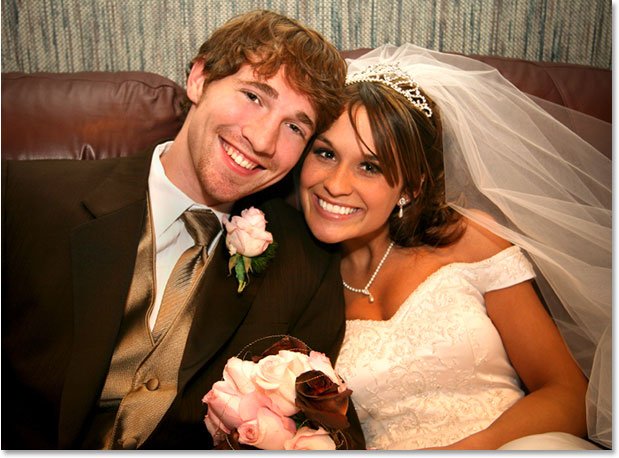
The original photo.
Stride 1: Duplicate The Background Layer
The first thing we need to exercise to create our moving picture frame is indistinguishable our Background layer. The Background layer is the layer which contains our original prototype, and if we look in our Layers palette, we can come across that information technology'southward currently the merely layer we have:
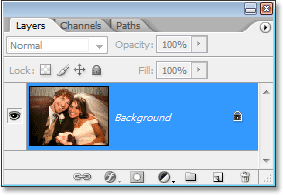
The Layers palette in Photoshop showing the epitome on the Groundwork layer.
Let's duplicate the layer using the handy keyboard shortcut, Ctrl+J (Win) / Command+J (Mac). If we wait back in our Layers palette, we can run into that we at present take a re-create of the Background layer, which Photoshop has named "Layer 1" for united states, above the original:
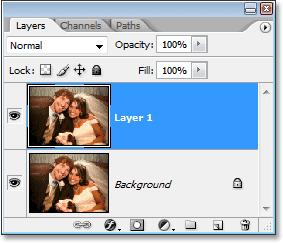
Printing "Ctrl+J" (Win) / "Control+J" (Mac) to indistinguishable the Background layer.
Step 2: Add Extra Canvass Space Effectually The Image
We need to add some extra infinite around our photo. The extra space is going to become our picture frame. The amount of space you add together depends on how large y'all desire your frame to be. Go up to the Paradigm bill of fare at the top of the screen and choose Canvas Size. When the Sail Size dialog box appears, enter how much infinite yous want to add together effectually the epitome. I want a fairly thick frame for my photo, then I'thou going to enter a value of 1.5 inches for both the Width and Height options. Make sure you lot accept the Relative pick checked also:
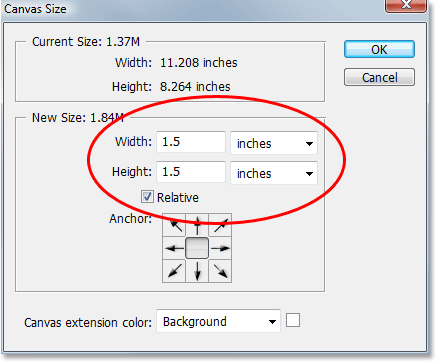
Enter the corporeality of canvas space you want to add around the image. Here, I'g adding 1.5 inches of space for both the Width and Tiptop.
Click OK in the top right corner of the dialog box to exit out of information technology and have Photoshop add the actress canvas space. You'll encounter the extra space appear effectually your photograph in your certificate window:
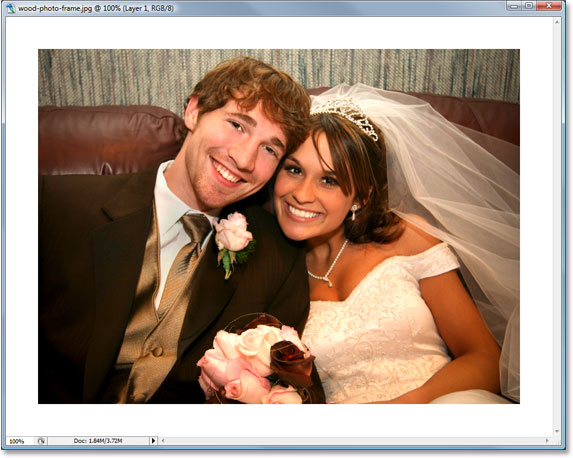
The extra space at present appears around the photograph in the document window.
Step 3: Add A New Bare Layer
Next, we demand to add a new blank layer higher up our two existing layers. With "Layer ane" (the acme layer) selected, click on the New Layer icon at the lesser of the Layers palette:
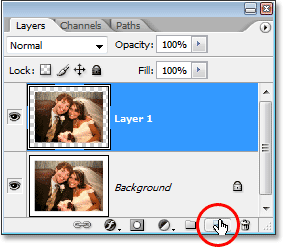
Click on the "New Layer" icon at the bottom of the Layers palette to add a new blank layer to the document.
Nada happens in the document window, but we can run into in the Layers palette that Photoshop has added a new bare layer for us and gave information technology the descriptive name "Layer 2":
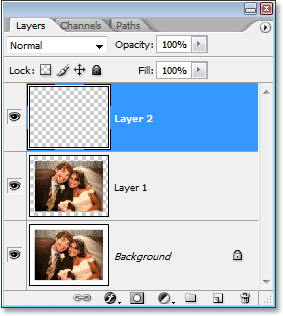
A new blank layer appears in the Layers palette above the other two layers.
Pace four: Fill The New Layer With Photoshop's Wood Pattern
To brand our frame look as if information technology's fabricated out of woods, we could go through the hassle of creating our ain wood texture, but we don't need to since Photoshop comes with a wood design already built in! With "Layer 2" selected, go up to the Edit bill of fare at the top of the screen and cull Fill. You can also utilise the keyboard shortcut, Shift+F5. Either way brings up the Make full dialog box. For the Contents selection at the meridian, cull Pattern from the drop-down bill of fare to the correct of the word "Use". So click on the little pattern thumbnail to the right of the words Custom Design and select the Wood texture from the option box that appears (it'southward the 4th one from the left, top row):
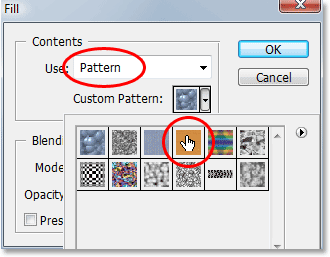
In the "Fill" dialog box, ready the "Contents" to "Pattern" and select Photoshop's congenital-in wood texture from the selection box.
Then, in the Blending section in the bottom one-half of the dialog box, set the Mode option to Normal and make certain the Opacity option is set to 100%:
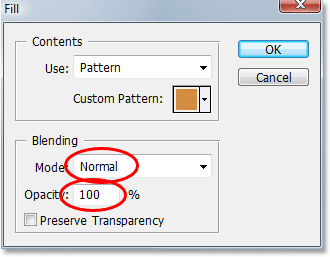
Set the"Blending Mode" to "Normal" and make sure "Opacity" is set to 100%.
Click OK to exit out of the dialog box. Photoshop will fill the unabridged layer with the wood texture, temporarily blocking the photo from view:
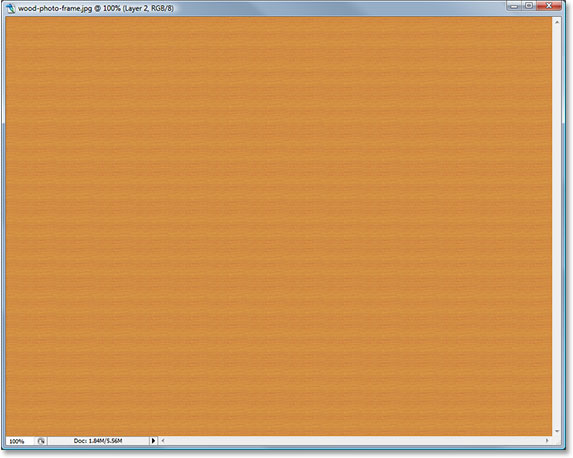
The new layer is now filled entirely with the forest texture.
We now accept the wood for our frame. We'll get in expect more like an actual frame and bring back our photo adjacent.
Step 5: Select The Photo On "Layer 1"
We're going to cut a pigsty in our wood pattern so we can see our photo in one case over again, and to do that, we'll use a layer mask. Hold down your Ctrl (Win) / Command (Mac) key and click direct on the preview thumbnail for "Layer 1" in the Layers palette:
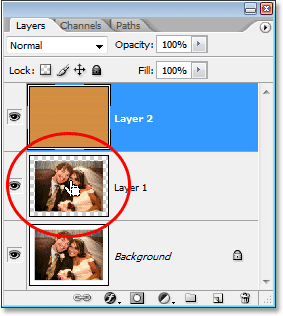
Hold down "Ctrl" (Win) / "Command" (Mac) and click on the preview thumbnail for "Layer 1".
This loads a choice around the photograph in the document window. We still can't see the photograph itself, but we can come across the selection box where the photo should be:
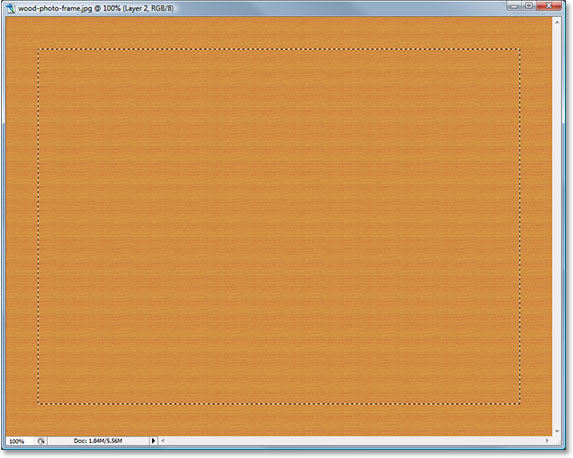
A selection box around the photo appears in the document window.
Footstep 6: Invert The Choice
Nosotros've selected the area where the photograph should appear, simply what we actually demand selected is the area around the photo (the frame), so nosotros need to invert our choice. To do that, go upward to the Select menu at the peak of the screen and cull Inverse, or use the quick keyboard shortcut Shift+Ctrl+I (Win) / Shift+Command+I (Mac). Either way inverts the selection, and if you look closely in the document window, y'all'll nonetheless see the same selection box around the photo every bit before merely at present you'll also see a selection box around the edges of the document window, letting u.s.a. know that nosotros at present accept the frame area around the photo selected:
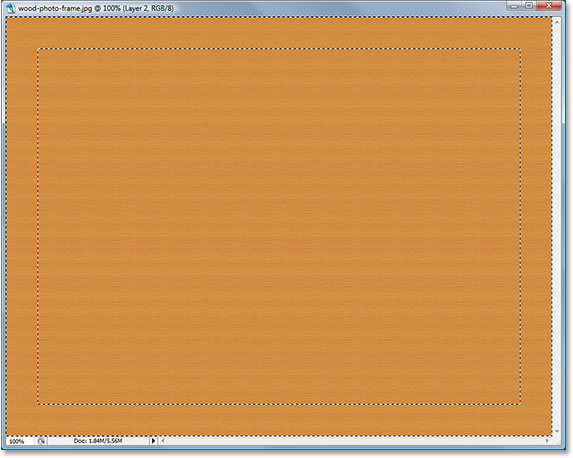
The document window showing the frame area around the photograph now selected.
Step 7: Add A Layer Mask
Now that we have the frame area selected, click on the Layer Mask icon at the bottom of the Layers palette:
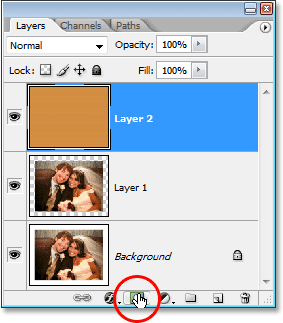
Click on the "Layer Mask" icon at the bottom of the Layers palette.
This adds a layer mask to "Layer 2", and at present the simply function of the layer that remains visible in the document window is the surface area nosotros had selected, which is the frame area effectually the photograph. The part that was non selected - the area where the photo should appear - is at present subconscious from view, allowing us to see our photo once again:
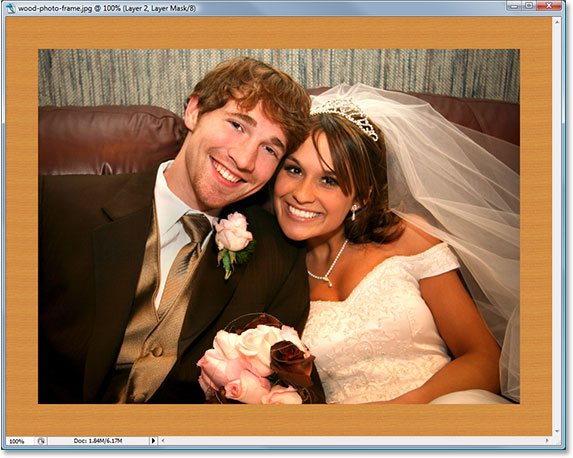
With the layer mask added to "Layer 2", the photo appears in the center of the frame.
If nosotros expect in our Layers palette, we can see that a layer mask thumbnail has been added to the right of the layer's preview thumbnail:
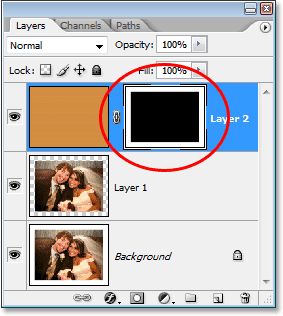
A layer mask thumbnail at present appears to the right of the preview thumbnail for "Layer 2".
For more information on layer masks, check out our Understanding Layer Masks tutorial in the Photoshop Basics section of the website.
Step eight: Deselect The Layer Mask And Select The Contents Of "Layer 2"
At the moment, our picture frame is looking a little flat. Nosotros need to requite it some depth, and we can do that easily using Layer Styles, which we'll do in a moment. Kickoff though, we need to select the frame. Currently, nosotros have the layer mask selected, not the layer itself. We can run across which i we have selected past looking at the layer'southward thumbnails in the Layers palette. Whichever thumbnail has the white highlight box around information technology is the one that'southward selected. The layer mask thumbnail is currently showing the highlight box, which tells united states of america that we have the layer mask selected. We need to accept the contents of the layer (the frame) selected, so click on the layer'southward preview thumbnail to select the frame itself:
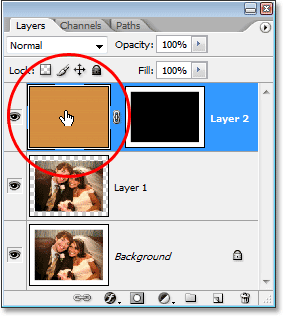
Click on the preview thumbnail for "Layer 2" to select the contents of the layer and deselect the layer mask.
Step 9: Add A "Bevel and Emboss" Layer Style
With the frame itself now selected, click on the Layer Styles icon at the bottom of the Layers palette:
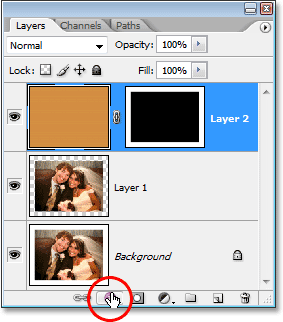
Click on the "Layer Styles" icon at the lesser of the Layers palette.
Then select Bevel and Emboss from the list of layer styles that appears:
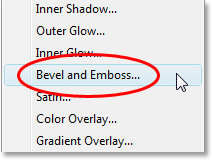
Select the "Bevel and Emboss" layer style.
This brings upward Photoshop'southward Layer Style dialog box set to the "Bevel and Emboss" options in the middle column. In the "Structure" section at the meridian, alter the Technique pick to Chisel Difficult, then enhance the Depth value to around 150%:
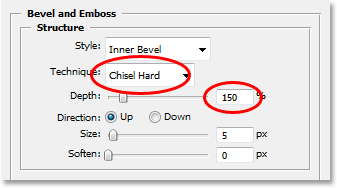
Ready the "Technique" choice to "Chisel Hard" and increase the "Depth" to "150%" in the "Bevel and Emboss" options.
Then, in the "Shading" options at the bottom of the dialog box, lower the Opacity of the Highlight Mode down to about 50%, so lower the Opacity of the Shadow Mode to around 60%:
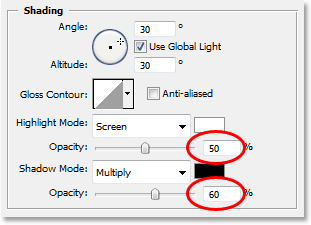
Lower the "Opacity" of the "Highlight Way" to fifty% and the "Shadow Mode" to threescore%.
This gives our frame more of a 3D look to it:
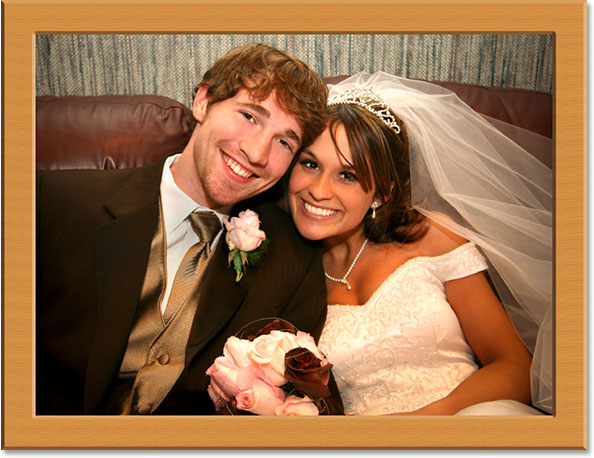
The picture frame now has a 3-dimensional advent.
Step 10: Add together A "Color Overlay" Layer Style
If you lot're happy with the colour of the picture show frame, yous can skip this next step. If, like me, you lot'd prefer a darker color to the wood, hither's how to change it. Click directly on the words Color Overlay on the left of the Layer Mode dialog box. Make sure you lot click straight on the words themselves and not just inside the checkbox. Clicking within the checkbox will turn on the Color Overlay layer style but it won't give usa admission to the options for it. We want the options, so click directly on the words themselves:
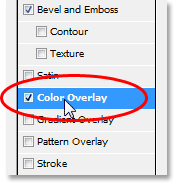
Click directly on the words "Colour Overlay" on the left of the Layer Style dialog box.
This changes the centre column of the Layer Way dialog box to the Color Overlay options. To change the color of the frame, click on the color swatch to the correct of the Blend Mode options:
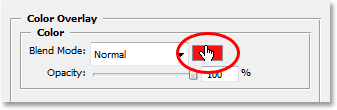
Click directly on the colour swatch to the right of the "Blend Mode" options.
This brings up Photoshop's Colour Picker. I want to change my frame color to a darker brown, so I'll choose that color from the Color Picker:
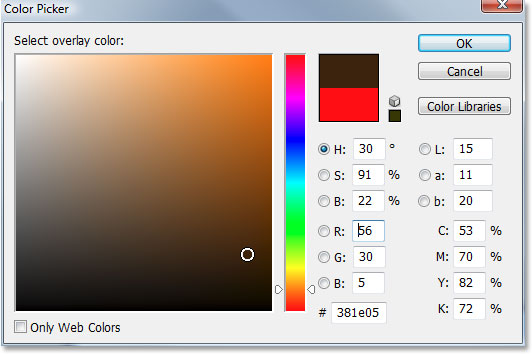
Choose the color you want your frame to be from the Color Picker. Here, I'g choosing a dark brown.
Click OK to exit out of the Color Picker. You'll run into the new color applied to your frame, but the frame now appears as a solid colour. We've lost the wood texture. To bring the wood texture back, modify the Blend Way of the Color Overlay to Color Burn:
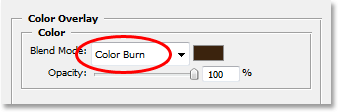
To bring dorsum the wood texture in the frame, modify the "Blend Style" of the Colour Overlay layer fashion to "Color Burn".
Click OK to exit out of the Layer Style dialog box. Here's my frame later changing its colour to a darker dark-brown and setting the Alloy Mode to "Color Burn down":
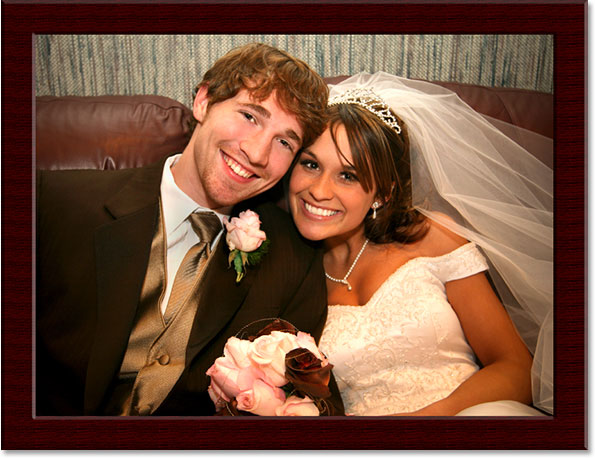
The color of the frame has now been inverse to a night chocolate-brown.
Nosotros're almost done! We have 1 more simple layer way to add, and we'll practice that side by side!
Footstep eleven: Select "Layer 1"
We need to select our photo over again, and so click on "Layer i" in the Layers palette to select information technology:
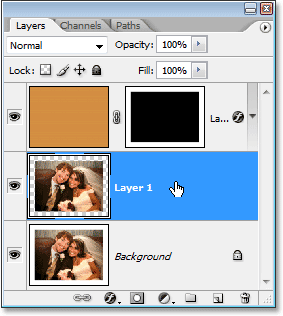
Select "Layer i" in the Layers palette.
Step 12: Add An "Inner Shadow" Layer Fashion
We're going to end things off by adding a scrap of a shadow to our photo, which is going to give the frame even more of a 3D look to information technology. With "Layer 1" selected, click once again on the Layer Style dialog box at the lesser of the Layers palette:
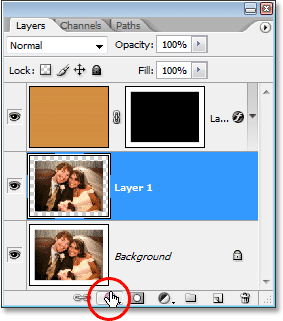
Click on the "Layer Mode" icon at the bottom of the Layers palette.
This time, choose Inner Shadow from the list of layer styles that appears:
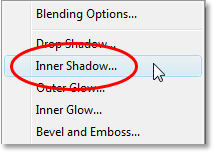
Cull "Inner Shadow" from the list of layer styles.
This brings up Photoshop'due south Layer Style dialog box once again, this fourth dimension set to the "Inner Shadow" options in the middle column. All we need to do here is lower the Opacity of the shadow so it's not quite as intense. Lower the Opacity option down to around 65%:
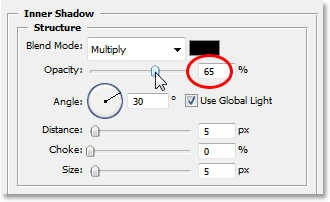
Lower the "Opacity" of the Inner Shadow down to effectually 65% to lower its intensity.
Click OK to get out out of the Layer Manner dialog box, and nosotros're done! Hither, after adding a a bit of a shadow to my photo, is my final wood picture frame:
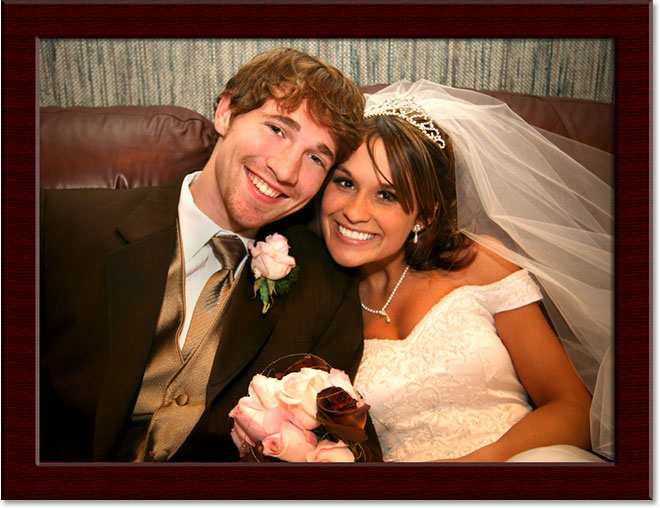
The final result.
And in that location we have it! That'due south how to create a simple wood photo frame in Photoshop! Visit our Photo Effects department for more than Photoshop effects tutorials!
Other Stuff
© 2022 Photoshop Essentials.com.
For inspiration, non duplication.
Site design past Steve Patterson.
Photoshop is a trademark of Adobe Systems Inc.
Source: https://www.photoshopessentials.com/photo-effects/wood-picture-frame/
0 Response to "How To Set Photo Frame In Photoshop"
Post a Comment